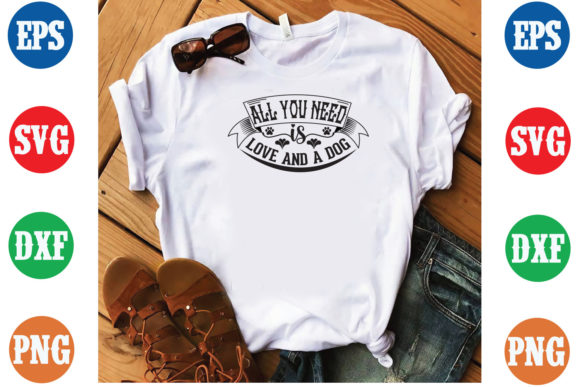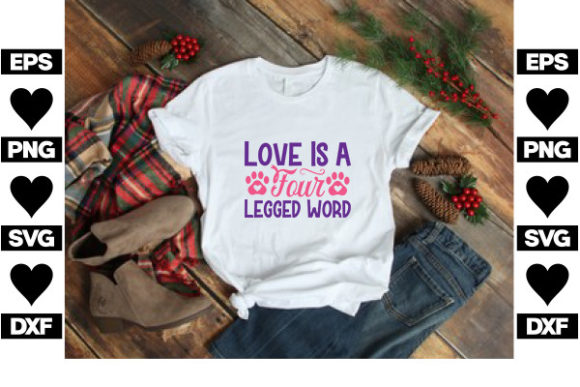
Dog SVG Design, Love is a Four Legged
As someone who’s stitched thousands of custom pieces—from boutique baby onesies to holiday market tote bags—I opened Dog SVG Design, Love is a Four Legged expecting warmth, simplicity, and quiet sincerity. What I found was exactly that: a clean, heartfelt graphic built for real-world embroidery, not just digital display. It’s the kind of design that lands softly but stays memorable—especially when stitched onto a soft cotton tea towel or a relaxed-fit unisex sweatshirt.
A First Stitch Tells the Whole Story
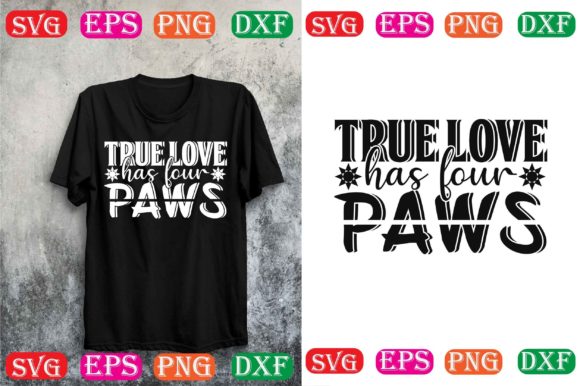
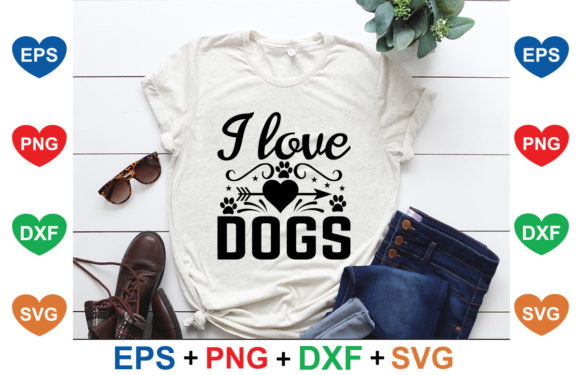
The layout feels intentionally unhurried. A gentle silhouette of a sitting dog anchors the composition, while “Love is a Four Legged” curves beneath it in friendly, rounded sans-serif lettering—no sharp angles, no forced whimsy. There’s no clutter, no extra flourishes, no competing elements. That restraint is rare—and valuable. In embroidery, less isn’t lazy; it’s legible, durable, and scalable. I immediately pictured this stitched on a linen pillow cover for a pet-friendly Airbnb listing—or as a subtle chest embroidery on a baby romper, where tiny details matter more than ever.
Where This Design Earns Its Keep
Dog SVG Design, Love is a Four Legged shines brightest on mid-weight, stable fabrics: cotton twill aprons, loopback sweatshirts, canvas totes, and kitchen towels. On those surfaces, the balanced negative space around the dog shape gives stabilizer room to do its job, and the lettering holds crispness without overloading stitch density. I used it recently for a small-batch run of embroidered denim jackets—centered above the left pocket—and customers commented on how “calm” and “intentional” it felt compared to busier pet-themed designs.
It also translates well into handmade product lines. As an Etsy seller, I’ve tested how this design reads in printable mockups: it holds up cleanly in both black thread on cream fabric and white thread on navy. That versatility matters when you’re building consistent branding across listings—whether you’re selling embroidered patches, personalized gifts, or craft fair merchandise.
Where to Pause—and Test
This isn’t a one-size-fits-all embroidery file. The lettering, while clear at 3–4 inches wide, starts to lose definition below 2.5 inches—so skip it for tiny cap fronts or baby hat brims unless you’re willing to manually simplify the text. Likewise, avoid dense fill-stitch areas on stretchy knits (like lightweight t-shirts) without proper cutaway stabilizer and reduced stitch density. I learned that the hard way on a first-run batch of ribbed crewnecks—the dog’s outline held fine, but the thinner strokes in the word “Legged” feathered slightly under tension.
Dark fabrics demand attention too. The design’s open spacing works beautifully with light thread—but if you’re using it on charcoal fleece or black denim, double-check contrast in your embroidery software preview. Some letterforms sit close enough that adjacent stitches can visually merge without sufficient thread weight or stabilizer support.
What It Adds—Beyond the Stitch
There’s emotional resonance here that elevates a simple machine embroidery design into something people want to wear, gift, and keep. It doesn’t shout “dog lover”—it invites recognition. That makes it ideal for boutique branding, wedding favors (think: embroidered napkins for a dog-friendly ceremony), or nursery decor where tone matters as much as theme.
From a craft business perspective, Dog SVG Design, Love is a Four Legged supports professionalism—not through complexity, but through clarity. Customers trust clean execution. When the satin stitch on the dog’s ear sits smooth and even, when the curve of the phrase aligns with natural garment drape, it signals care. That perception directly affects perceived value, repeat orders, and word-of-mouth referrals.
Practical Notes Every Embroiderer Should Run Through
- Always test on scrap fabric first—especially with textured weaves like linen or terry cloth, where stitch definition can soften unexpectedly.
- Check thread color contrast before hooping your final piece. Light gray thread on oatmeal canvas? Lovely. But light gray on heather grey might vanish.
- Review stitch density in your editing software. If the original file leans heavy on fill stitches, reduce density by 10–15% for lightweight cotton or layered garments like hoodies.
- Confirm hoop size compatibility. The design fits comfortably in a 4×4 hoop at standard sizing—but if you plan to scale beyond 5 inches, verify stitch count won’t overwhelm your machine’s memory or cause thread breaks.
- Inspect small details in vector view: corners on letters like “L” and “G” should be smooth, not jagged—critical for clean satin stitch transitions.
- Test black-and-white mockups before listing on Etsy or launching a small shop product. Does it read clearly without color context?
- Use appropriate stabilizer: tear-away for stable wovens, cutaway for knits, and lightweight fusible for delicate baby items.
- Verify licensing terms before selling finished products or bundling this as part of a digital embroidery file pack. The ZIP includes EPS, SVG, PNG, and DXF files—ideal for both embroidery machines and design adaptation—but commercial use rights must be confirmed directly with the source.
Final Thought: A Design That Breathes With Your Work
Dog SVG Design, Love is a Four Legged doesn’t try to be everything. It’s not flashy. It’s not trendy. It’s thoughtful—designed for longevity, not virality. That makes it unusually reliable for real embroidery projects: the kind where time, thread, and customer trust are all on the line. Whether you’re stitching a single personalized gift or scaling a small shop product line, this design earns its place in your library—not because it’s perfect, but because it’s honest, adaptable, and quietly confident. And in the world of handmade product creation, that kind of integrity stitches deeper than any satin finish.