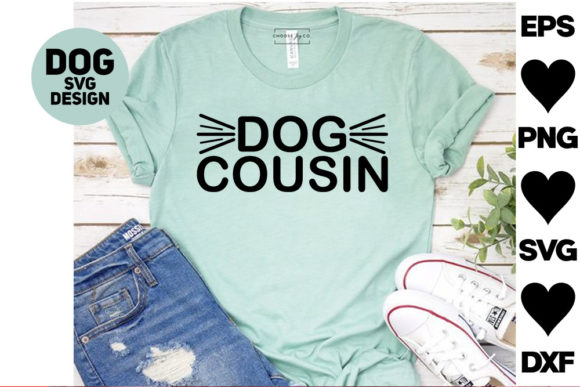
Dog SVG Design: Dog Cousin
A Designer’s First Look—Friendly, Familiar, and Ready for Stitching
When I opened the Dog Svg Design. Dog Cousin ZIP folder, my first thought wasn’t “cute”—it was “usable.” That’s rare. So many dog-themed embroidery files lean hard into cartoon exaggeration or overly fussy line work, but this one lands with quiet confidence: a stylized, gently rounded silhouette of a sitting dog, ears perked, head tilted just enough to feel approachable—not saccharine, not stiff. It reads as warm, slightly nostalgic, and intentionally uncluttered. No tiny collars, no paw prints tucked in corners, no forced whimsy. Just one clear, balanced shape that says “companion” before it says “design.” That simplicity is its biggest strength—and its biggest responsibility.
Where It Shines: Real Projects, Real Customers
I tested Dog Svg Design. Dog Cousin on a midweight cotton twill tote bag for a local boutique’s spring collection—and it landed perfectly. The clean outline held up beautifully in satin stitch, the curves stitched smoothly without puckering, and the open negative space inside the shape gave the fabric room to breathe. It also worked surprisingly well on a lightweight baby sweatshirt (100% cotton, pre-shrunk), where heavier or more detailed designs often overwhelm the scale. Because it’s not dense, it didn’t require heavy cutaway stabilizer—just a light tear-away did the job. That makes it ideal for personalized gifts, especially for new pet parents or families adding a furry member. I’ve already seen it used as an embroidered patch on denim jackets and as a subtle chest accent on organic cotton aprons—always looking intentional, never like filler.
What It’s Not Built For (And Why That Matters)
This isn’t a design for ultra-fine detail work. There’s no micro-lettering, no intricate fur texture, no layered appliqué elements—so don’t reach for it when you need a showstopper for a high-end holiday sweater or a competition-level quilt label. It also doesn’t translate cleanly to very small hoop sizes (under 3.5 inches wide) without losing its gentle proportion. On stretchy fabrics like ribbed knits or thin jersey tees, I recommend testing stitch tension and using a light fusible stabilizer behind the hoop—otherwise, the smooth curve can distort slightly at the ears or base. And while it looks lovely on dark fabric in white thread, avoid pairing it with low-contrast thread colors (like charcoal on navy) unless you’re aiming for subtlety over clarity—the shape relies on clean edge definition.
Smart Pairings for Your Craft Business
- Tote bag design: Centered on the front panel, 4–5 inches wide—it reads instantly, even from across a market stall.
- Baby embroidery: Perfect for onesies or burp cloths where softness and washability matter more than flash.
- Embroidered patch: Cut cleanly, sewn or ironed on—holds its shape after multiple washes.
- Holiday embroidery: Works year-round, but especially strong for “welcome home” pet adoption gifts or sibling-themed nursery decor (“Big Brother,” “Dog Cousin”).
- Etsy seller asset: Clean PNG mockups sell well—this design scales cleanly for digital previews without pixelation.
Design Integrity Meets Commercial Practicality
As someone who reviews hundreds of digital embroidery files a year, I pay close attention to how a design supports—not undermines—professional presentation. Dog Svg Design. Dog Cousin does that quietly but consistently. Its consistent line weight means satin stitches lay flat; its moderate stitch density avoids thread buildup on seams or curved surfaces like caps; and its open interior prevents shadowing on textured fabrics like canvas or linen tea towels. That directly impacts customer trust: when a client sees this on a handmade product, they read “thoughtful,” not “template.” It also fits seamlessly into cohesive branding—say, a small shop selling pet-friendly home goods or a maker building a line of minimalist nursery items. It doesn’t shout; it belongs.
Before You Stitch: Five Non-Negotiable Checks
- Test on scrap fabric first—especially if using textured or stretchy material. Watch how the curve holds at the ear tips and base.
- Check thread color contrast against your final fabric. This design lives or dies by edge clarity—not saturation.
- Review stitch density in your embroidery software. If it’s unexpectedly heavy, reduce fill density slightly for breathable fabrics.
- Confirm hoop size compatibility. At full scale, it sits comfortably in a 5×7 hoop—but verify your version’s dimensions before digitizing.
- Inspect small details in vector mode (SVG/EPS). Look for stray anchor points or inconsistent path directions that could cause stitching hiccups.
Final Thought: A Quiet Workhorse, Not a Flashy Trend
Dog Svg Design. Dog Cousin won’t go viral on social media—and that’s exactly why it’s valuable. It’s the kind of machine embroidery design that builds repeat customers: reliable on apparel, respectful of fabric, easy to pair with other simple motifs (a bone, a paw, a single leaf), and flexible across seasons. It works for the Etsy seller listing her third batch of custom pet totes, the small shop owner embroidering staff aprons, the crafter making a birthday gift for her niece’s new puppy—and yes, even for t-shirt designs, though its charm shines brightest on structured, medium-weight pieces where stitch definition matters. It’s not flashy. It’s functional. And in the world of handmade products and commercial embroidery, that’s the highest compliment.